
Newsletter Subscribe
Enter your email address below and subscribe to our newsletter
Enter your email address below and subscribe to our newsletter


Cryptocurrency basics introduce digital money that runs on cryptography and decentralized networks. It relies on blockchain to secure a tamper-evident ledger and enable peer-to-peer transactions without traditional gatekeepers. The landscape includes many coins and tokens, each with different uses and…
 ByJohn A
Crypto wallets are tools that hold public and private keys to access blockchain networks, enabling sending, receiving, and managing crypto. They come in hardware, software, and web forms, each balancing security and convenience. Hot wallets offer quick access; cold wallets…
ByJohn A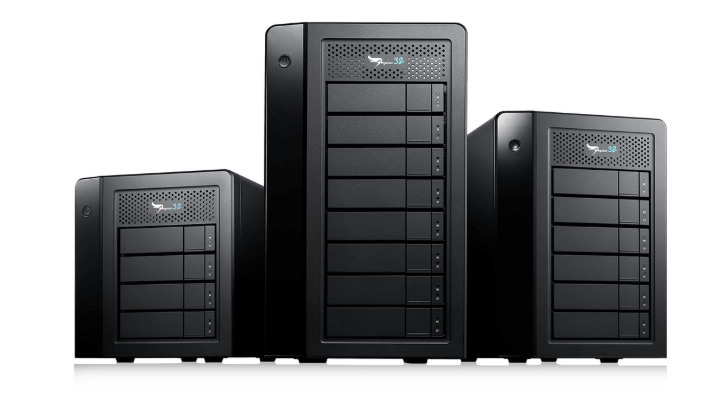
RAID systems combine multiple disks into a single logical unit to improve performance, capacity, or resilience. Data is scattered across disks (striping), duplicated (mirroring), or protected by parity for recovery. Levels vary in speed, fault tolerance, and usable space, with…
ByJohn A
Quantum computers use qubits to harness superposition and entanglement, enabling state spaces beyond classical bits. Quantum gates enact coherent transformations that reshape amplitudes in high-dimensional spaces. Decoherence and control errors limit performance, guiding the development of error correction and fault-tolerant…
ByJohn A
Platforms detect harmful content by analyzing signal sources and medium signals against formal policy rules, while incorporating user feedback to refine classifications. Human review serves as a corrective layer to align policy, assess ambiguity, and mitigate bias with documented rationale…
ByJohn A